Weekend Events Checklist: How to Plan Around Shire's Summer Fair, Parades, and Road Closures
October 05, 2026 - Events

September 30, 2026 - Opinion
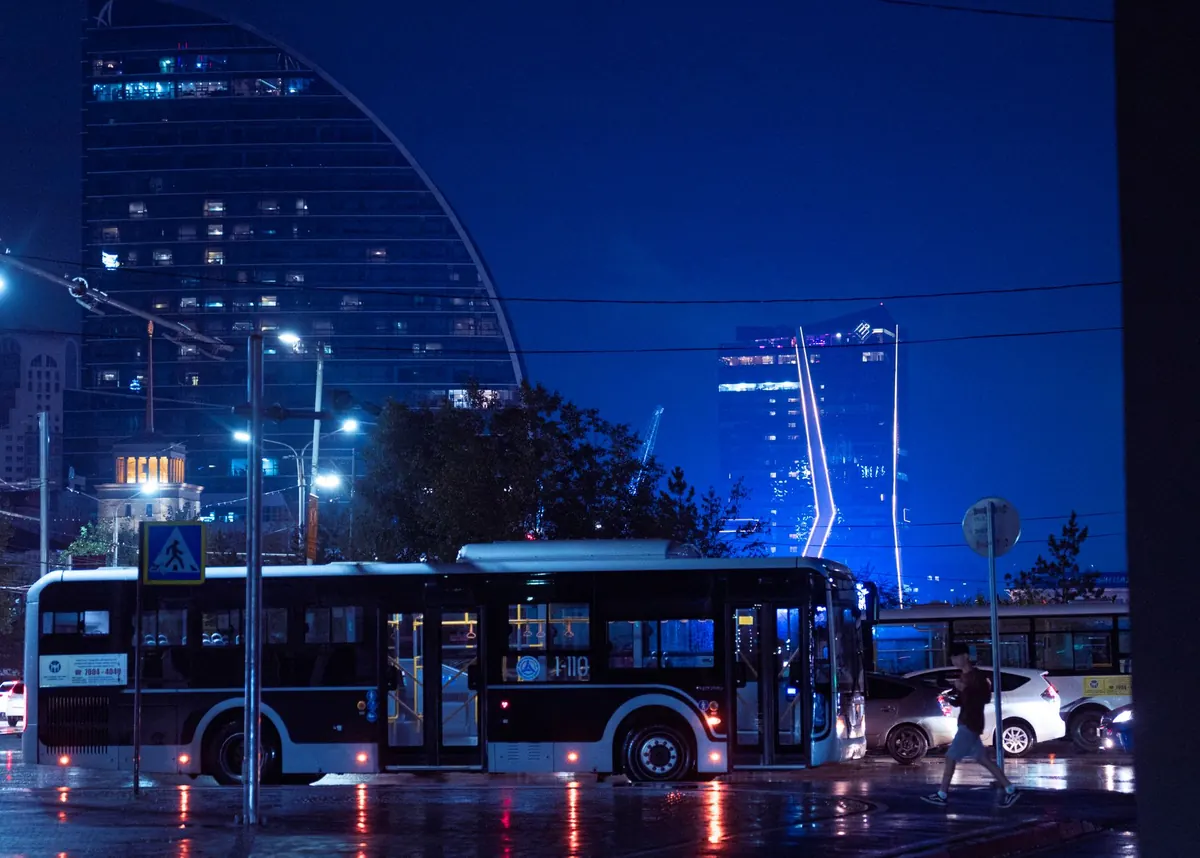
Shire does not have a night bus. It has a last bus, and the difference matters more than most of us notice. Depending on the route, that last bus rolls through somewhere between eight and half past nine in the evening, and after it passes, the town is effectively closed to anyone without a car. That is a strange way to run a place, and it costs us in ways that never show up on a transit budget: missed shifts, rides begged from relatives, dangerous drives home, and a downtown that empties out just as its kitchens and bars are hitting their stride.
Look closely at any Shire timetable and you can see the assumption baked into it. Buses run every fifteen minutes at eight in the morning, thin out around midday, drop to every half hour by early evening, and then simply stop. The system was designed for a workforce that commuted in at nine and out at five, and it was designed well for that. The trouble is that the workforce changed and the timetable didn't.
This is not a criticism of the drivers, who do a difficult job on tight schedules, or of the planners who inherited a network built on old assumptions. It is a criticism of the assumption. Evening service should taper, not vanish. A town of our size ought to have something moving after dark, even if it is one bus an hour on two or three main corridors. Right now we have nothing, and "nothing" is the hardest thing to plan a life around.
When people picture a bus rider, they picture a commuter heading to an office. In reality, the riders who lose the most from a nine o'clock shutdown are the people whose work starts when everyone else's ends.
Ask any of them how they get home and you get the same short list. A lift from a partner or a parent. A taxi if the shift was long enough to justify it. Or a walk along an unlit road with no pavement, which is the option people take when the other two fall through. None of that is a system. It is a workaround, and workarounds fail at the worst possible moment.
Nobody seriously argues that a night bus eliminates impaired driving. People make poor choices for all sorts of reasons, and a bus on the High Street will not stop every one of them. But there is a straightforward point underneath the argument: the more ways there are to get home without a car, the fewer people end up driving when they shouldn't.
Consider how the current setup pushes people toward the worst option. A group goes out, one person is nominated to stay sober and drive everyone home — which works until it doesn't and the same person does it four weekends in a row. Someone has two drinks, waits an hour, decides they're fine, and drives a route they've driven a thousand times. A worker finishes a shift at one in the morning, discovers the taxi queue outside the venue is forty minutes long, and starts weighing up the walk against the car in the car park.
A bus running hourly until three in the morning changes that arithmetic. It gives the designated driver a night off. It gives the person who didn't plan ahead a second option. It costs far less than one serious collision — in emergency response, court time, insurance and sheer human grief — ever does.
Shire's evening economy has a ceiling, and it isn't the quality of the food or the music. It's the last bus.
A restaurant can't build a second sitting around customers who need to be at the stop by quarter to nine. A music venue can't sell a nine o'clock headline set to anyone who came in on the 7:15. Bar staff who live two miles out and don't drive are quietly limited to venues within walking distance, which shrinks the pool of people employers can hire from and makes rotas harder to fill.
Late-night service isn't a subsidy for venues. It's infrastructure they can plan against, in the same way a delivery lane or a well-lit pavement is. Every person who takes the bus into town instead of driving also leaves a parking space free and arrives on foot, spending money along the way.
Nobody is proposing a full overnight network. The case for doing nothing usually rests on the cost of running every route all night, which is not what's on the table. A pilot should be small, boring and measurable.
The fair objection is cost, and it deserves a fair answer rather than a shrug. Late-night service will not pay for itself at the fare box, at least not at first. But there are places to look before reaching for a general tax increase.
Low-ridership daytime journeys on quiet routes can be reallocated rather than duplicated. Large employers — the hospital trust, the distribution parks, the bigger hospitality groups — have a direct interest in staff being able to get to work, and employer-funded passes are a common arrangement elsewhere. Venues and the business improvement district can contribute toward a route that delivers customers to their doors. Sponsorship of a single named night service is also an option.
The right way to judge any of this is against what the status quo already costs us: unfilled shifts, taxi money drained out of local wages, and the emergency response to collisions that a bus might have prevented.
Opinion pieces don't change timetables. Budget lines do, and budget lines move when enough people turn up to talk about them.
If you want a night bus in Shire, here is what actually helps. Write to your ward councillors — short, specific, one paragraph about your own experience of the gap after nine. Turn up to the next transport or budget scrutiny meeting and speak for three minutes; you do not need to be an expert, you need to be a resident with a shift pattern. If you employ people on evenings or nights, say so in writing and ask what a pilot would cost your staff in missed work. If you run a venue, tell the business improvement district that late-night footfall is a priority for you. And if you already walk home in the dark because there is no bus, say that out loud in public. It is a lot harder to dismiss than a spreadsheet.
The last bus is not a law of nature. It is a decision, made once a year, on a page nobody reads. It can be changed.
Photo: bayar-erdene B. / Pexels

Road closures, parking and timing can make or break a summer festival weekend. Here's a practical checklist for...
Shire High football returns a seasoned core, a few breakout candidates, and a rivalry-heavy schedule. Here’s what to...
Copyright © 2026 Shire Gazette. All Right Reserved.